
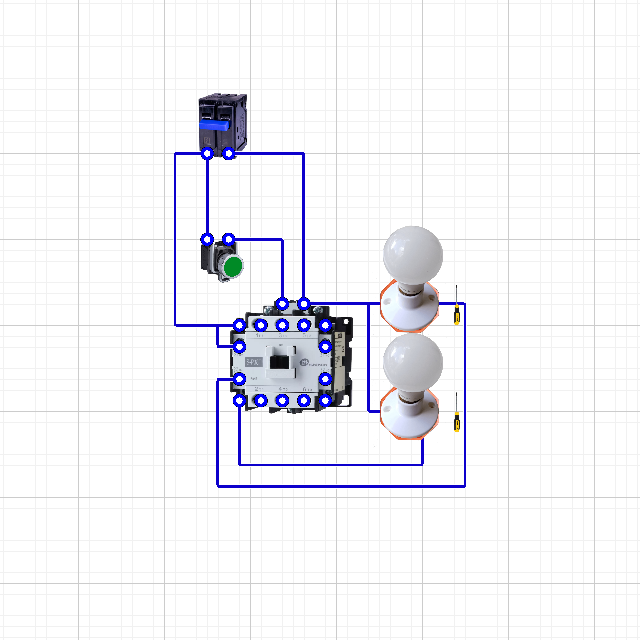
Motor control training is most effective when learners can test logic repeatedly without equipment risk. ElectroSim gives students a safe environment to validate start-stop circuits, contactor behavior, and interlocks before touching live components.
1. Start with a clear control objective
Define what your circuit should do first: start, stop, reverse, or hold state. Clear goals reduce trial-and-error wiring mistakes.
2. Build the control path first
Place protection devices, push buttons, and contactor control paths before power loads. This mirrors practical panel-building discipline.
3. Test one condition at a time
Toggle switches and buttons incrementally, then verify expected outputs. This helps you isolate interlock and sequencing errors faster.
4. Use simulation feedback to debug
If a motor does not run, inspect open loops, terminal mismatches, or missing return paths in your control logic.
5. Save and compare versions
Create baseline, revision, and final versions. Comparing versions helps learners understand exactly what change solved the issue.
ElectroSim supports this workflow with point-to-point wiring, real-time simulation, and cloud sharing for instructor review.